Finding Your Perfect Journal Pen: A Thoughtful Selection Guide

When you sit down to write in your journal, one of the first decisions you make happens before any words touch the page: which pen will you use? Many people focus entirely on what they’re writing about, but the act of writing itself matters just as much. When you find a pen that feels right in your hand, that produces crisp, clear lines, that somehow makes your thoughts flow more easily—suddenly journaling becomes something you look forward to, not something on your to-do list.
The right pen isn’t just a tool. It’s an invitation to slow down, to think deeper, and to show up honestly with yourself.
Why Your Journal Pen Matters More Than You Think
Journaling isn’t simply recording events. It’s a sensory experience—the weight of the pen between your fingers, the slight resistance of the nib against paper, the rhythm of your handwriting. These tactile moments create a kind of meditation, a conversation between your hand and your thoughts.
When your pen doesn’t feel right, you feel it immediately. Your hand tenses. You press harder than necessary. The experience becomes effortful instead of easy. Over time, this friction can discourage you from showing up on the page.
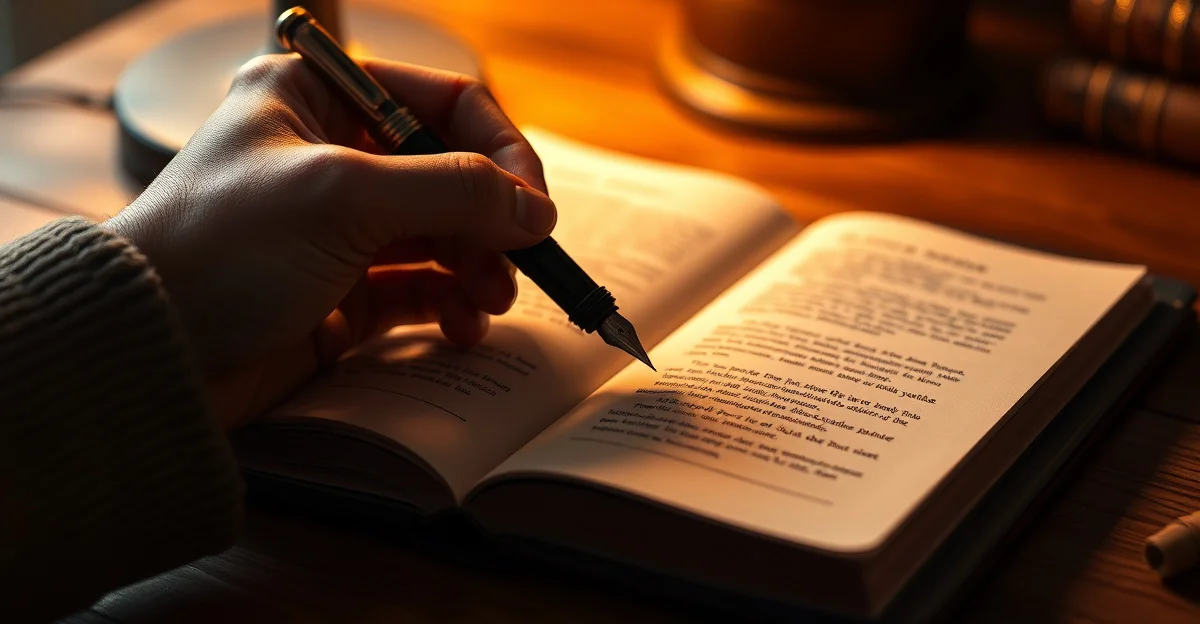
Before you choose a pen, consider these practical factors:
- Ink flow: Does it write smoothly with light pressure, or does it require more force?
- Weight and balance: Is it comfortable to hold for 10, 20, or 30 minutes?
- Line width: Does it match how you naturally write—fine and detailed, or broader and more flowing?
- Durability: Will the ink fade over time, or will your words remain clear years from now?
- Writing surface feel: How does it interact with your specific journal paper?
The Golden Rule of Pen Selection
There is no “best” pen for everyone. The best pen is the one that feels right in your hand and makes you want to keep writing.
Best Pens for Different Journaling Styles
For detailed, introspective writing — Fine-tip ballpoint (0.5mm or finer)
If you tend to write small, precise letters and want to fit more thoughts onto each page, a fine-tip ballpoint is your friend. It allows for delicate, controlled lines and works beautifully if you enjoy creating margin notes or underlining key phrases. The trade-off: your hand may tire more quickly, so take breaks and don’t grip too tightly.
For comfortable, sustainable writing — Medium-tip ballpoint (1.0mm)
This is the Goldilocks of journal pens—not too fine, not too thick, just right for most people. A medium tip produces clear, readable lines without requiring excessive pressure. You can write for extended periods without hand fatigue. For everyday journaling, this is the most versatile choice.
For a touch of elegance and ease — Fountain pen
Fountain pens have a reputation for being precious or complicated, but they’re actually wonderfully practical for journaling. The ink flows with minimal pressure, which means your hand relaxes naturally. The result feels more intentional, more considered. A quality fountain pen is an investment, but it’s one that pays dividends over years of journaling.
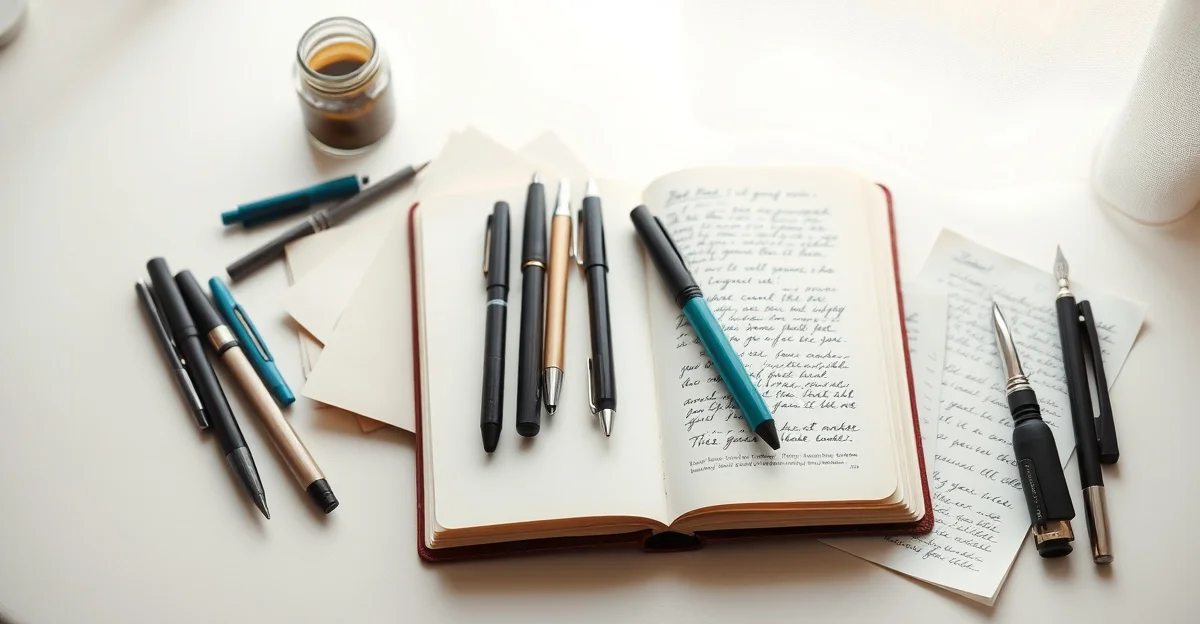
Test Before You Commit
Visit a stationery store and hold several pens. Write a few sentences on their sample paper. Notice which one feels like an extension of your hand rather than an obstacle in your way. Your instinctive response matters more than any review online.
Using Color as a Form of Expression
You don’t have to stick with black or blue ink. In journaling, color becomes another language for expressing yourself.
Black ink creates a sense of formality and clarity—ideal for processing important decisions or recording significant moments. Blue ink feels approachable and warm, often the choice for reflective, emotional writing. Green ink carries a sense of calm and growth. Red or purple can highlight moments of intensity, excitement, or creative breakthrough.
Some journalers develop a personal system: one color for gratitude, another for challenges, another for questions that need sitting with. Over time, flipping through your journal, you can see patterns in not just what you wrote, but how you expressed yourself.
Create Your Own Pen Ritual
Consider keeping a small set of pens with different colors or weights beside your journal. Let your hand choose the pen that matches your mood each day. This small act of intention-setting can deepen your journaling practice.
Matching Pen to Paper
The best pen is only half the equation. Your journal’s paper matters too. Thick, textured paper pairs beautifully with fountain pens and feels luxurious with a quality ballpoint. Thinner paper might benefit from a finer tip to prevent bleed-through. Smooth paper glides differently than slightly textured surfaces.
If you’re using Q Diary’s questions as prompts, you’re likely writing in whatever journal feels most personal to you—and that’s perfect. The point is to notice what combination of pen and paper makes your hand want to move across the page.
Moving Forward: The Practice Matters Most

Don’t get stuck searching for the “perfect” pen. Start with what you have. A basic ballpoint is absolutely sufficient for real, meaningful journaling. What matters is showing up consistently, responding to Q Diary’s thoughtful questions, and allowing yourself to discover who you are through the act of writing.
As you journal through the year and compare your answers to the same questions from previous years, you’ll notice your own growth. The pen you hold is just a vehicle for that discovery—but it’s a vehicle worth choosing thoughtfully.
Don't Let Pen Paralysis Stop You
Searching endlessly for the ideal pen can become a form of procrastination. If you’ve been thinking about starting to journal but keep saying “once I find the right pen,” let this be your permission to start today with whatever writing instrument is nearest to you.
Your journal is a conversation with yourself. The pen you choose is simply the tool that makes that conversation more fluid, more honest, more real. Choose one that feels good, then get to the meaningful work of showing up on the page.
Start writing today.