Fitness Journaling for Better Results: Track Your Body and Mind

You start a new fitness routine with genuine excitement. Two weeks in, the motivation dips. Or maybe you’ve been working out consistently for months, but you’re not sure if anything is actually changing. This is where a fitness journal becomes your most honest companion—not just to track numbers, but to understand yourself more deeply.
A workout journal goes beyond recording weight and reps. It’s a tool for self-discovery. When you reflect on how your body feels, your energy levels shift, what kind of movement makes you feel alive, and how you overcome fatigue on tough days, you begin to recognize patterns that shape your relationship with exercise. Those small insights become the foundation for a habit that actually sticks.
Why Your Fitness Journal Matters
Exercise transforms both your body and your mind. A fitness journal isn’t about managing numbers—it’s about understanding yourself more clearly.
When you log the post-workout feeling, notice which exercises energize you most, and reflect on how you pushed through resistance, you’re building self-awareness. This awareness is what separates a temporary fitness goal from a lasting lifestyle change. You’re not just counting reps; you’re learning what works for you, specifically.
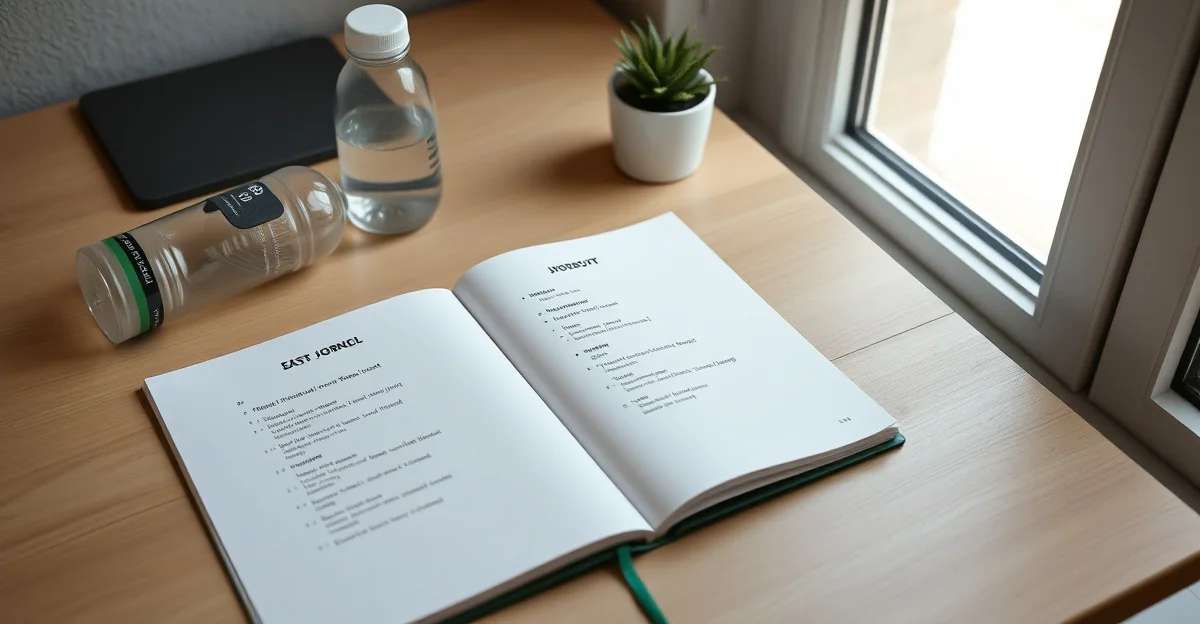
What Makes a Fitness Journal Different
A fitness journal isn’t a performance scoreboard. It’s a space where you honor your effort, acknowledge your journey, and notice progress that numbers alone can’t capture. Honesty matters far more than perfection.
Building Your Own Fitness Journal Structure
There’s no single “right” way to keep a workout journal. The best approach is one that feels natural to you. Here’s a simple framework that many people build from:
Layer 1: The Basics
- Date and time of your workout
- Type of exercise (weightlifting, running, yoga, etc.)
- Duration
- Intensity level (light / moderate / intense)
Layer 2: Physical Observations
- Sets, reps, and weight lifted (if applicable)
- How your body felt—fatigue, soreness, energy
- Any physical changes you noticed
- What felt easier than last time
Layer 3: The Reflective Part
- Your mental state during the workout
- How you felt afterward
- What challenged you and what you did well
- One thing you’ll adjust next time
The reflective layer is where the real value emerges. This is where you move from data collection to genuine self-discovery.

Start Small and Build Gradually
Don’t try to fill in every category from day one. It becomes a chore, and chores don’t last. In your first week, just record the exercise and intensity. Once that feels automatic, add the physical observations. When that becomes routine, layer in the reflection. This gradual approach builds a sustainable habit.
Consistency Without Pressure
The most effective fitness journal is one you’ll actually use. Perfection kills consistency. Here’s how to keep the practice alive:
Pick a consistent time. Write your entry right after your workout, or during your evening wind-down. A set routine removes the decision-making friction.
Keep it brief. Full paragraphs aren’t necessary. A few honest sentences beat a blank page. “Felt strong today. Weights felt lighter than last week. Need more sleep—woke up tired” is enough.
Review weekly. Set aside ten minutes each week to flip back through your entries. You’ll spot patterns that daily writing alone won’t reveal—like how your performance dips when you’re stressed, or how certain workouts genuinely improve your mood.
Avoid the Comparison Trap
Fitness journals are personal documents. They’re not meant to compare your progress to anyone else’s. If you find yourself using your journal to judge yourself harshly, step back and remember: you’re building a tool for self-compassion, not self-criticism.
Discovering Your Personal Patterns
After a few weeks of consistent journaling, something shifts. You start noticing patterns that reveal who you are as an exerciser. Maybe Monday mornings feel energizing, but Thursday evenings are always a struggle. Perhaps strength training lifts your mood more than cardio does. Or you might notice that workouts are one of the few places where you feel truly present and clear-headed.
These aren’t trivial observations. They’re the foundation for a fitness approach that actually works for your life and personality. Instead of forcing yourself into someone else’s ideal routine, you’re designing one that honors your real preferences and patterns.
When tough days come—and they will—your journal becomes evidence that you’ve overcome them before. Flipping back to a difficult week you powered through reminds you that you’re stronger than your current resistance.

The Real Goal
Your fitness journal isn’t about achieving perfection or proving progress to anyone. It’s about honoring the effort you’re putting in and learning what your body and mind need. Over time, these small moments of reflection accumulate into genuine understanding—of your body, your resilience, and your capacity for change.
Start today. Write one sentence about how your last workout made you feel. That’s all. From there, let the practice grow at its own pace. Those entries will become a record not just of workouts completed, but of the person you’re becoming in the process.